UX designer
Internet of things
UI designer
Mining & oil
Mobile app
Figma
February, 2019 - April, 2019
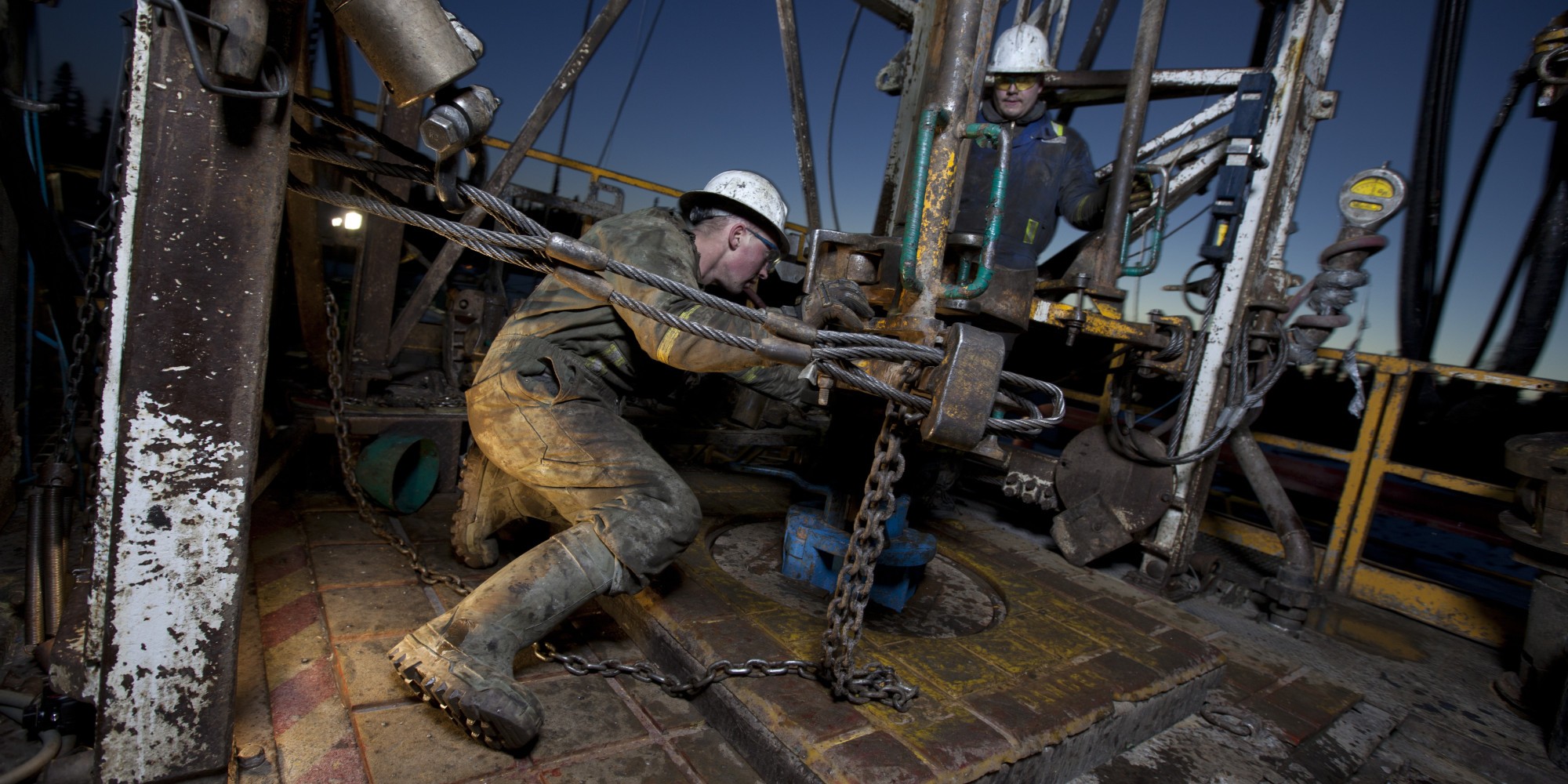
Imagine a worker injured alone in a remote oil mining site, where medical supplies are distant and hidden. In those critical moments, every second counts. How does company ensure timely assistance when lives are on the line? The stakes are high—not just for the worker but also for the company, which must support the worker’s family if tragedy occurs.
Our project was born out of this critical need for swift, reliable access to medical supplies. By developing a mobile app integrated with IoT technology, we aim to revolutionize our client's approach to medical management. This solution ensures that medical boxes are easily locatable and their contents are always available, providing crucial support in emergencies and safeguarding both employees and the company.
Enhance accessibility: Ensure that medical boxes are easily locatable and their contents are readily available to both medical and non-medical teams.
Improve emergency Response: Provide real-time information on medical box locations and inventory to facilitate quick access during emergencies.
Integrate IoT technology: Seamlessly incorporate IoT connectivity into medical boxes to track usage and manage inventory effectively.
Streamline user experience: Design an intuitive mobile app interface for efficient navigation and use by both medical and non-medical personnel.
Ensure accountability: Track who accesses medical boxes and when to prevent misuse and ensure that supplies are used correctly.
UIX designer
Product designer
In this project, I worked as the UI/UX Designer, collaborating closely with a product designer to develop a comprehensive solution for managing Pertamina's medical supplies. My primary responsibility was to design the user interface and experience for the mobile application, focusing on making the system intuitive and user-friendly for both medical and non-medical teams.
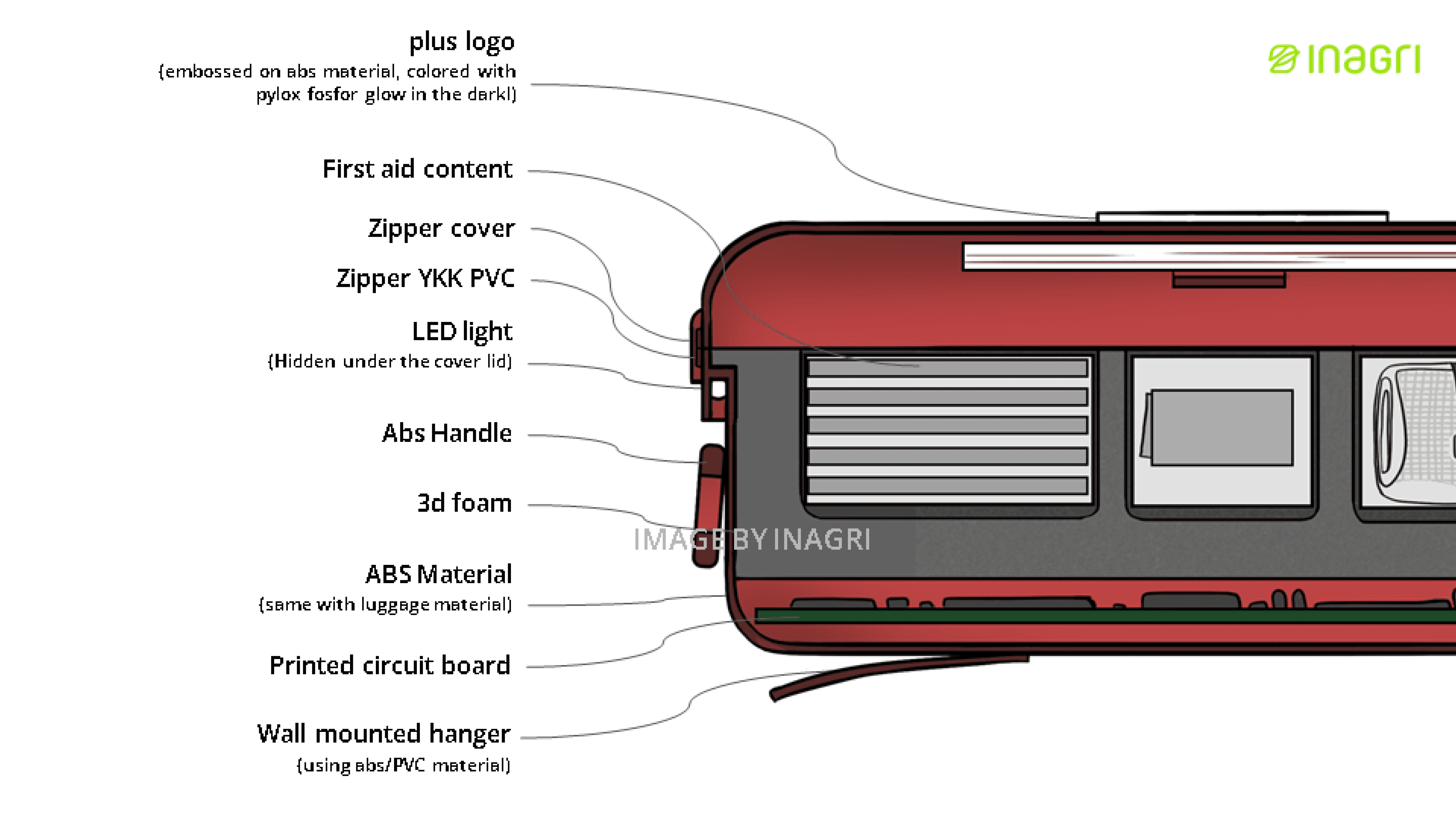
Together with the product designer, we tackled the challenge of integrating IoT technology into the medical boxes. This involved designing the physical and digital interactions, ensuring that each medical box was not only functional but also seamlessly connected with the app. We worked on creating detailed wireframes and high-fidelity mockups, and I developed interactive prototypes to visualize and refine the user flow.
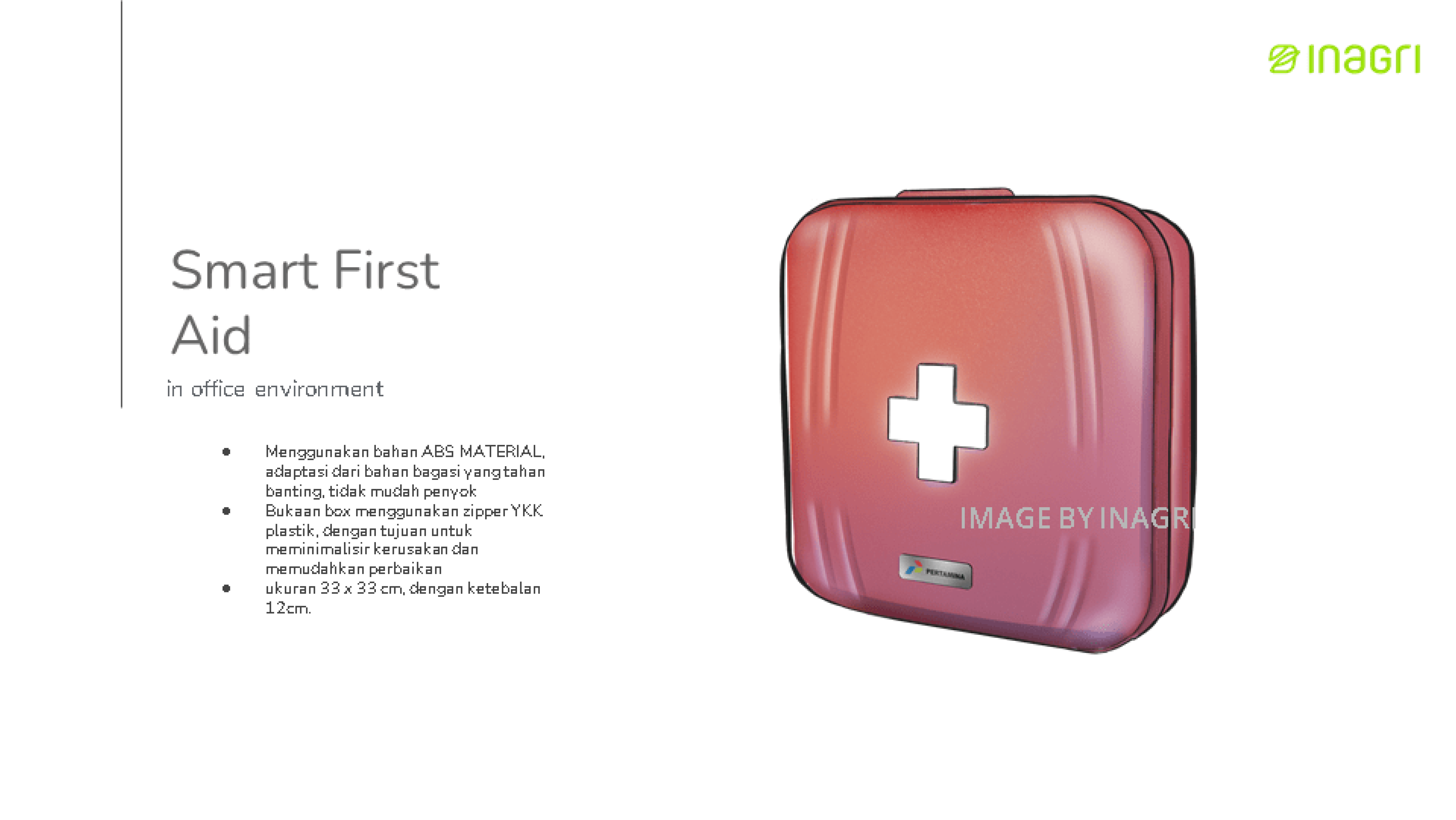
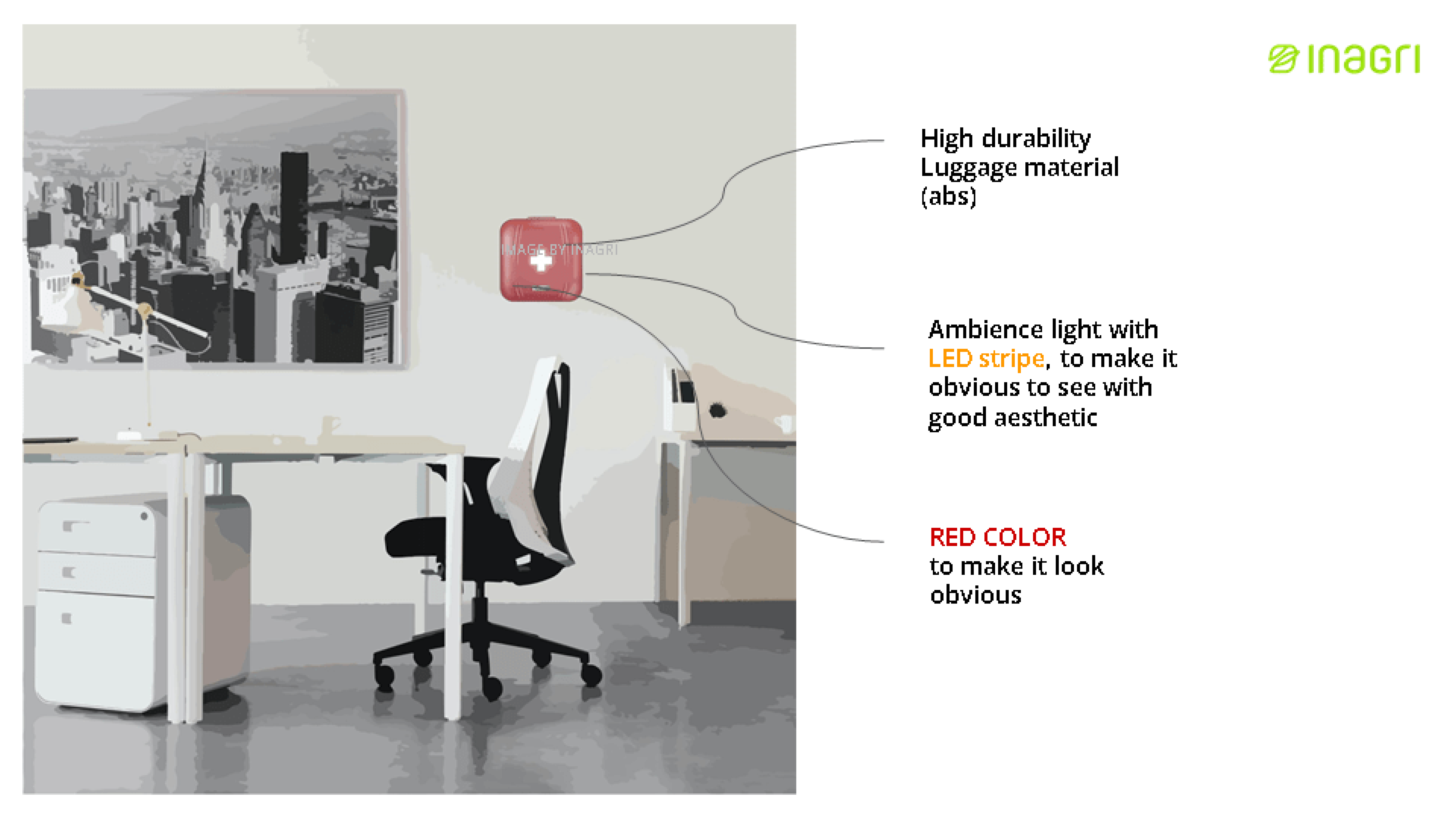
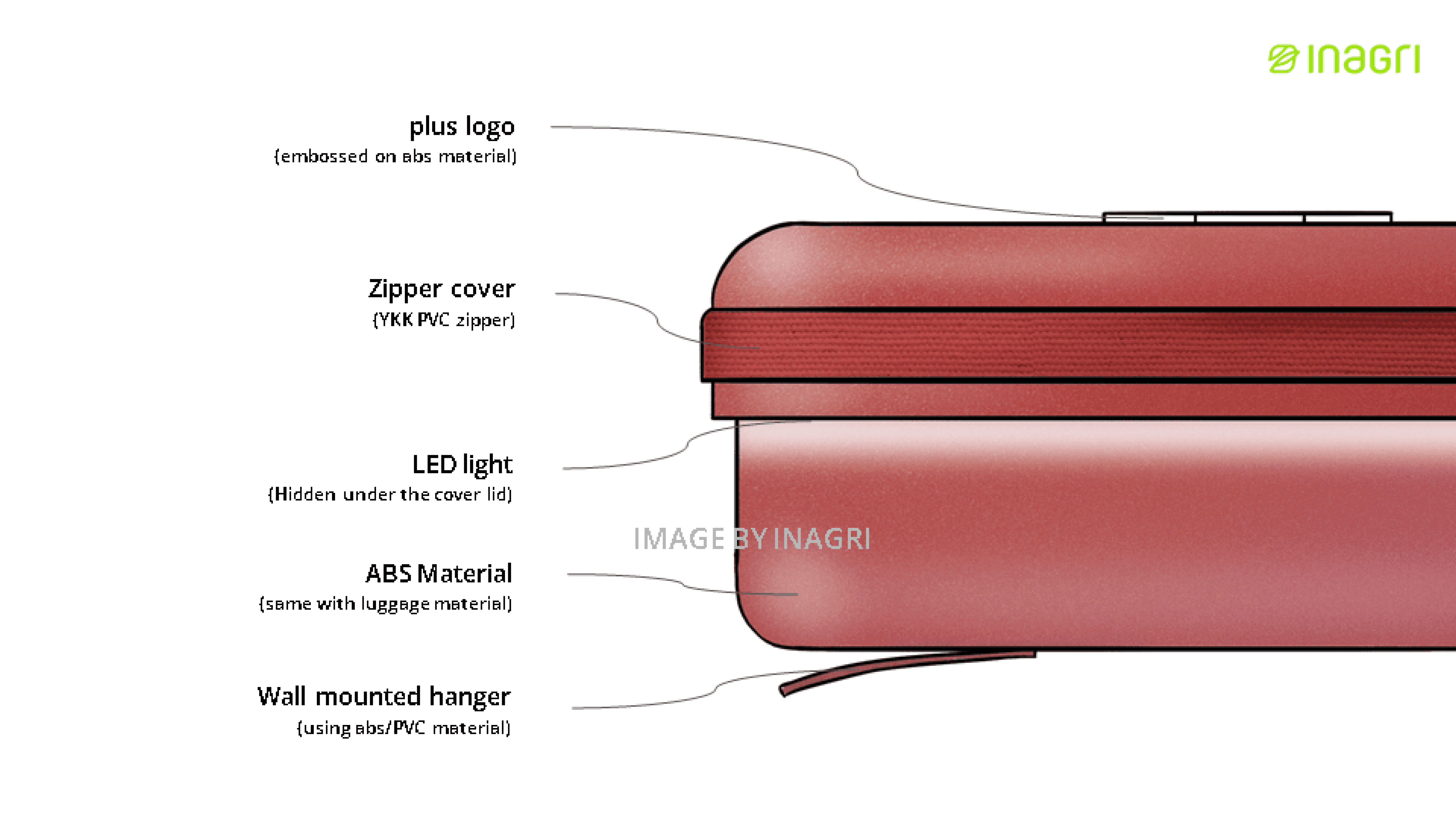
In office environment:
In field environment:
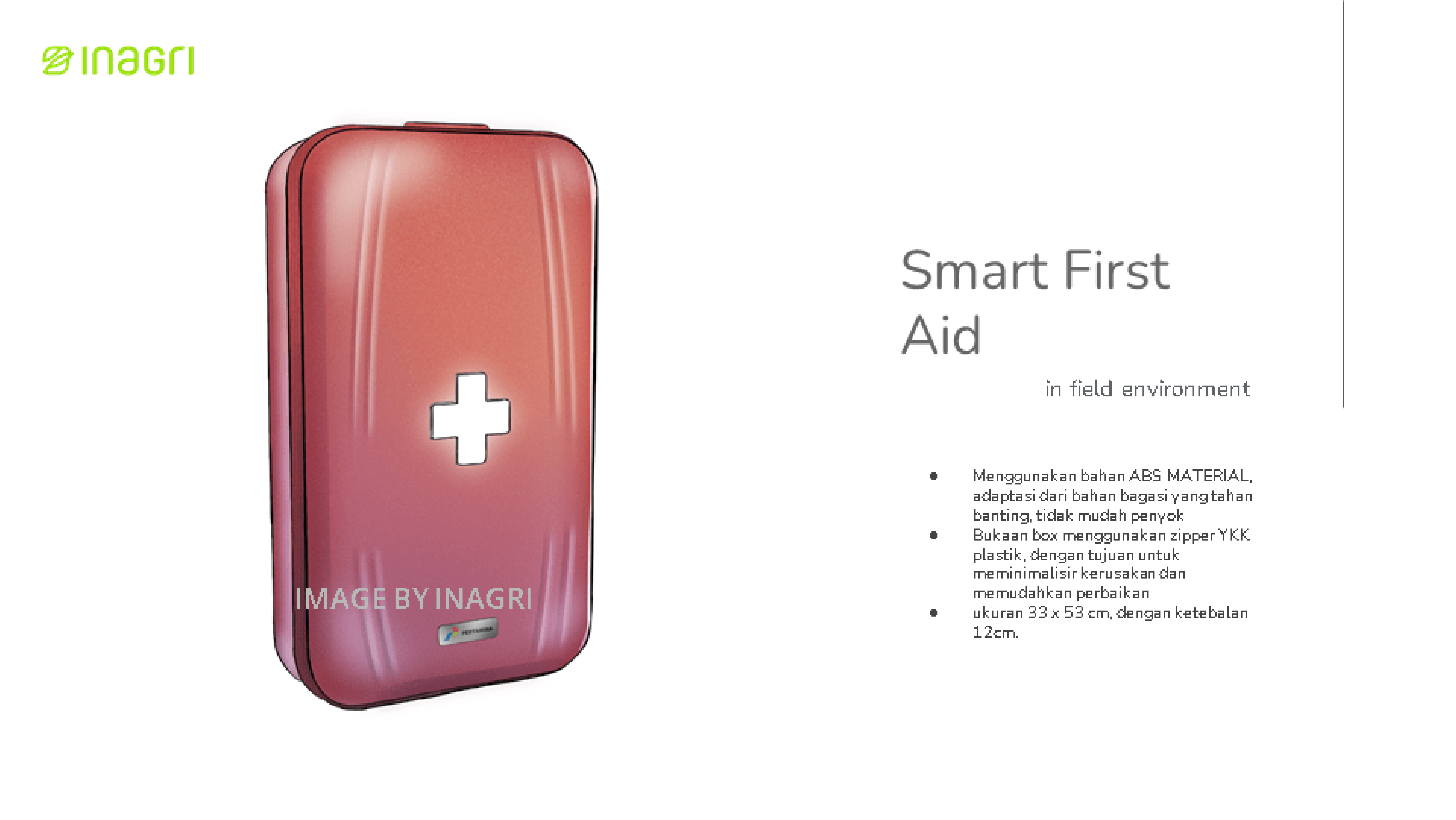
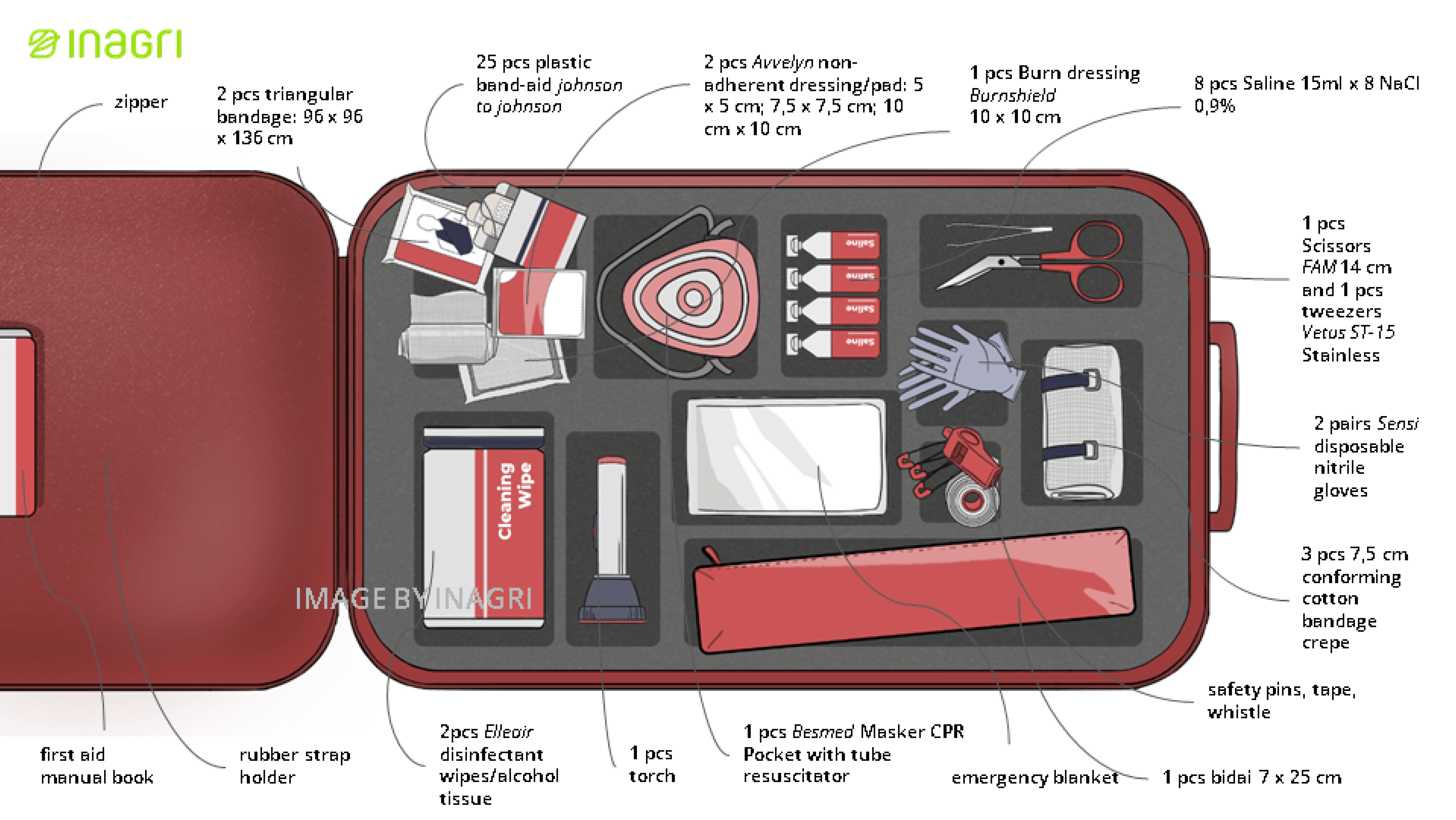
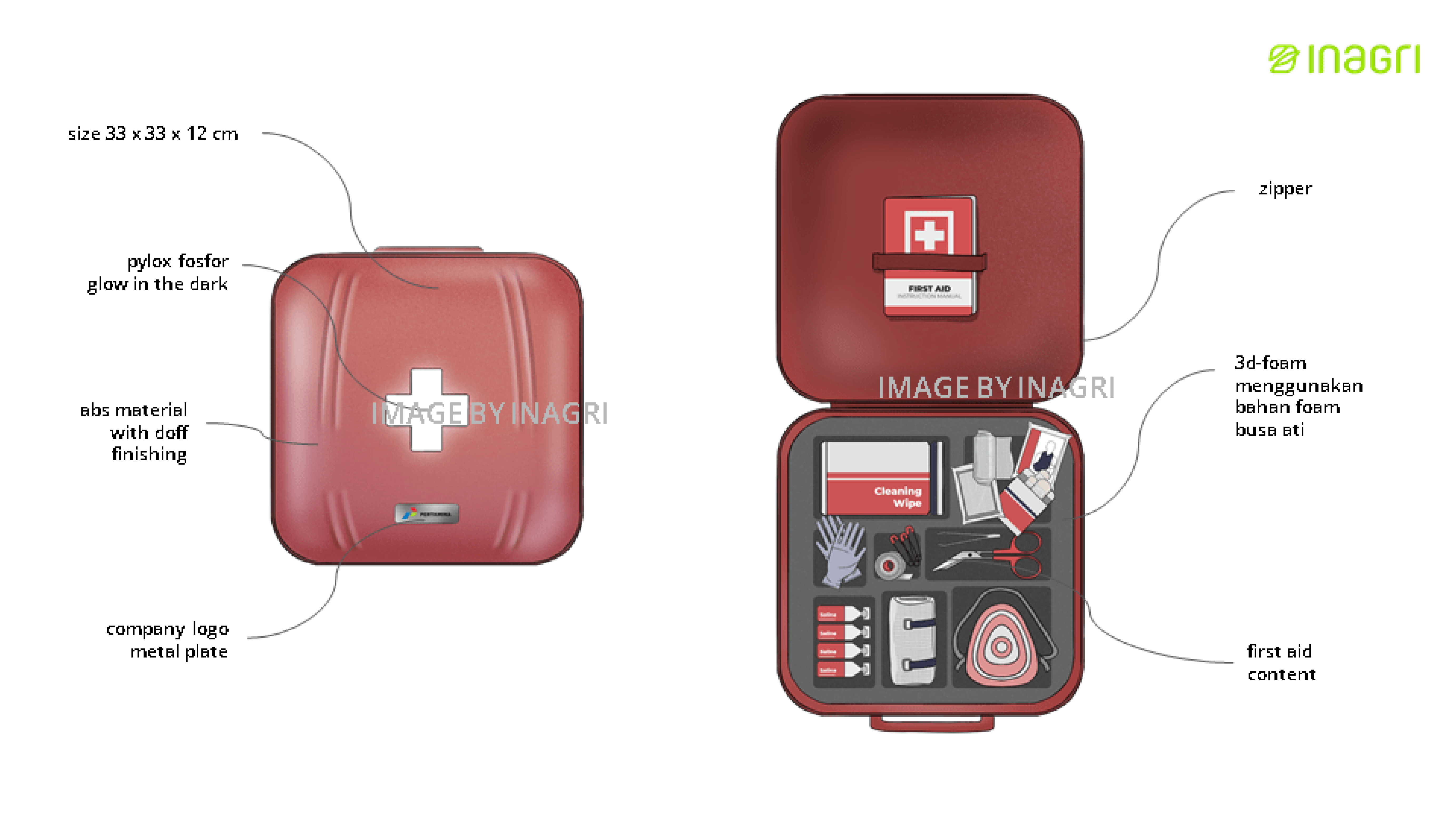
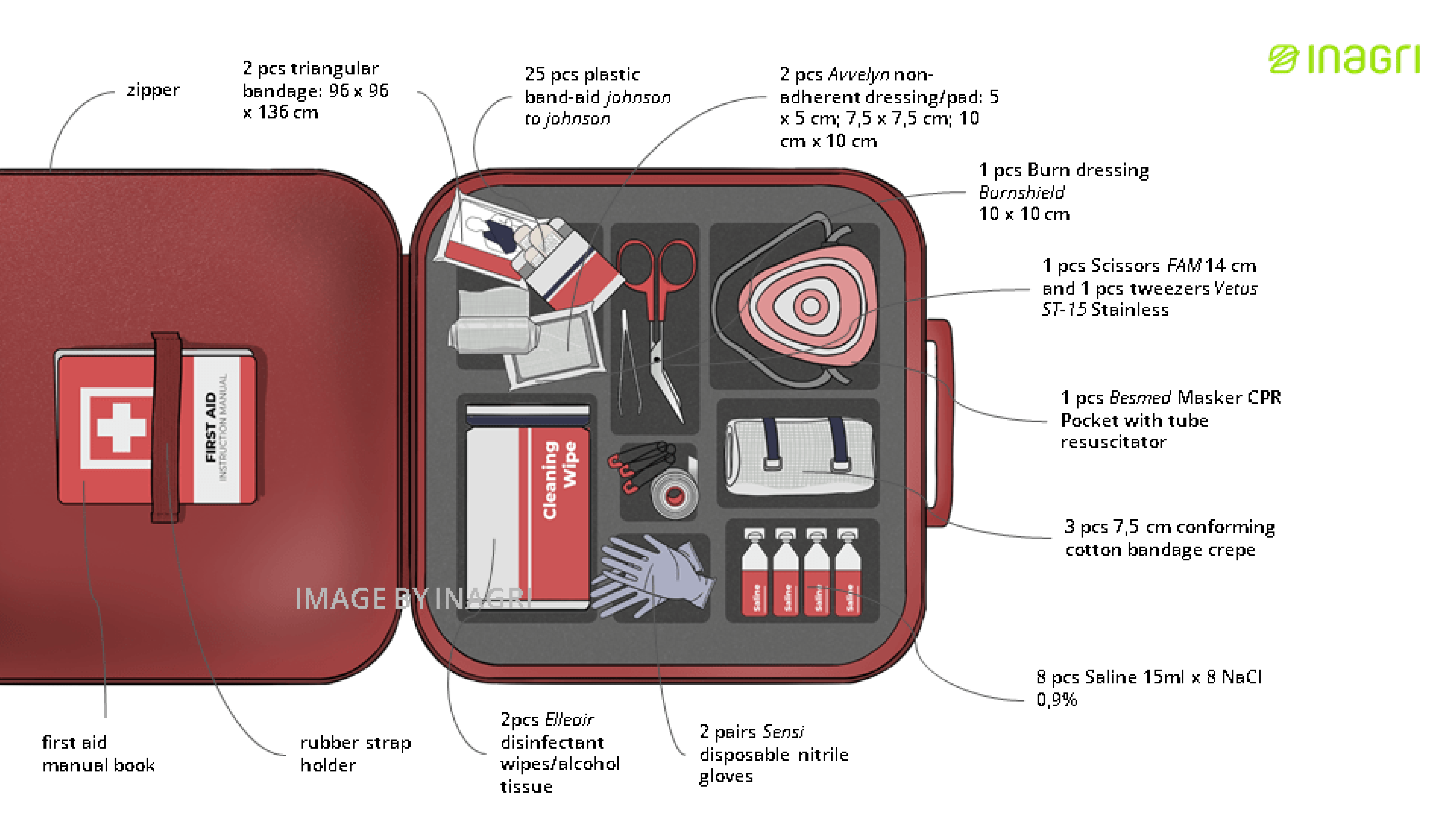
Our medical box comes in two types: a smaller version for office environments and a larger one for field use to meet more extensive needs. Both include essential first aid items such as bandages, scissors, disinfectant, tissues, medical gloves, NaCl solution, and a resuscitator tube. The field version adds safety pins, tape, whistles, emergency blankets, and flashlights.
Each medical box includes a first aid manual for easy guidance and is IoT-enabled, allowing healthcare staff to monitor item availability in real-time. This ensures field workers can use the supplies with confidence, knowing replacements are managed seamlessly.
The quantitative objectives goals include:
Understanding the percentage of Pertamina field workers who have faced difficulties locating a medical box when needed
Determining the average time required by field workers to find the nearest medical box during accidents
Gauging the level of support among field workers for the implementation of a medical box tracking application
Identifying key features desired in the medical box tracking application
The interview quantitative result (50 respondents)
76% of the respondents have experienced difficulty in finding a medical box when needed.
The average time taken by respondents to locate the nearest medical box during an accident is 11.5 minutes.
82% of the respondents support the provision of the medical box tracking application.
Features for locating the nearest medical box (98% of respondents), directions to the location (68%), and QR code scanning (61%) are the most desired features.
The qualitative objectives goals include:
Exploring the typical workflow followed by field workers when they need a medical box
Identifying the challenges and obstacles workers encounter while searching for medical boxes
Uncovering workers' expectations and preferences for features and design in the medical box tracking application
Identifying key features desired in the medical box tracking application
The interview quantitative result (50 respondents)
The common workflow involves searching for directional signs towards the nearest medical box, yet often these signs are unclear.
The primary challenge is the lack of directional cues and route maps to the medical box locations.
Workers hope for direct navigation to medical box locations and easy access through QR code scanning.
Medical officers anticipate the application facilitating monitoring of medical box usage.
Design preferences include simplicity, fast loading, and usability while wearing gloves.
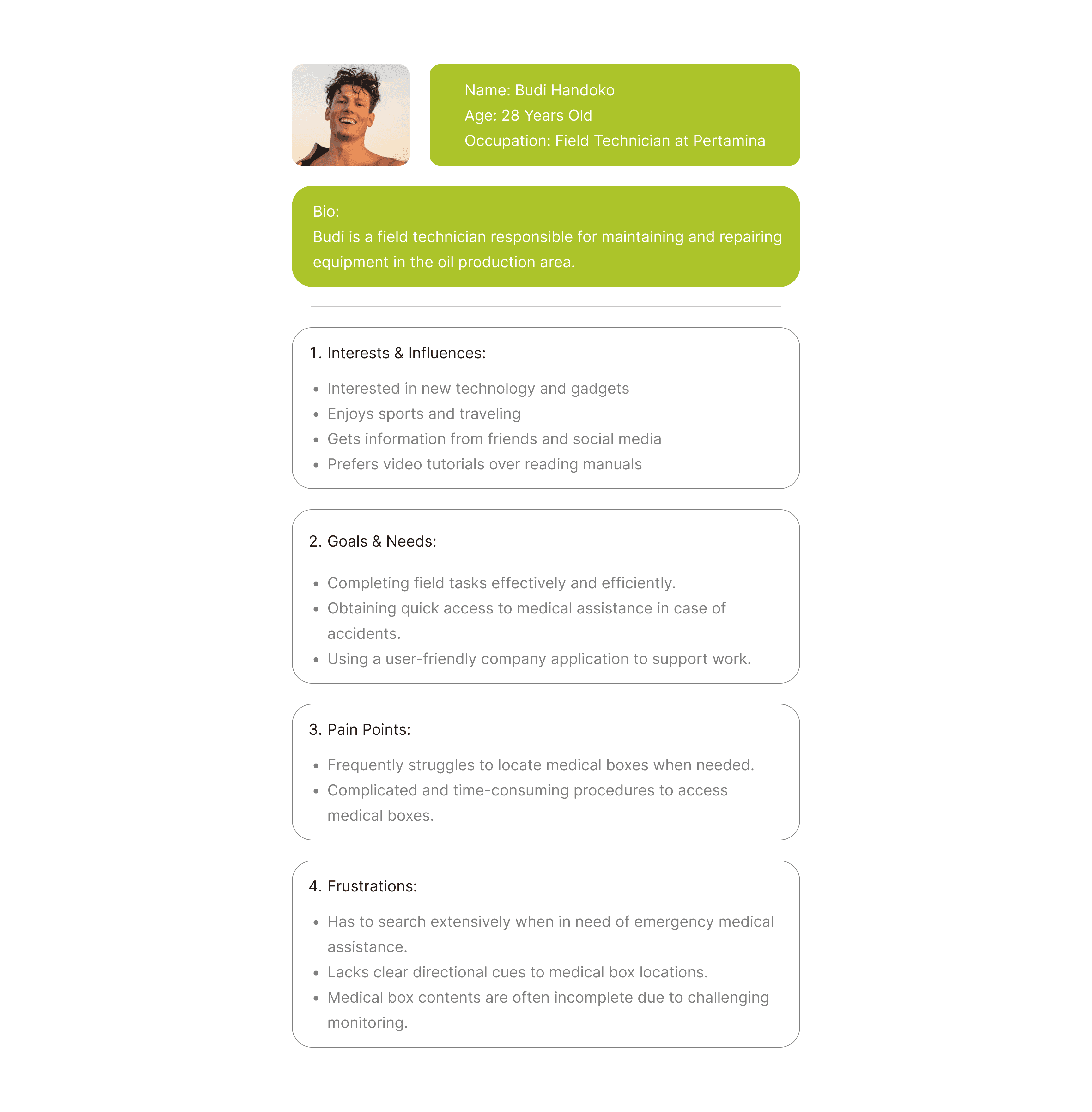
The healthcare staff flow
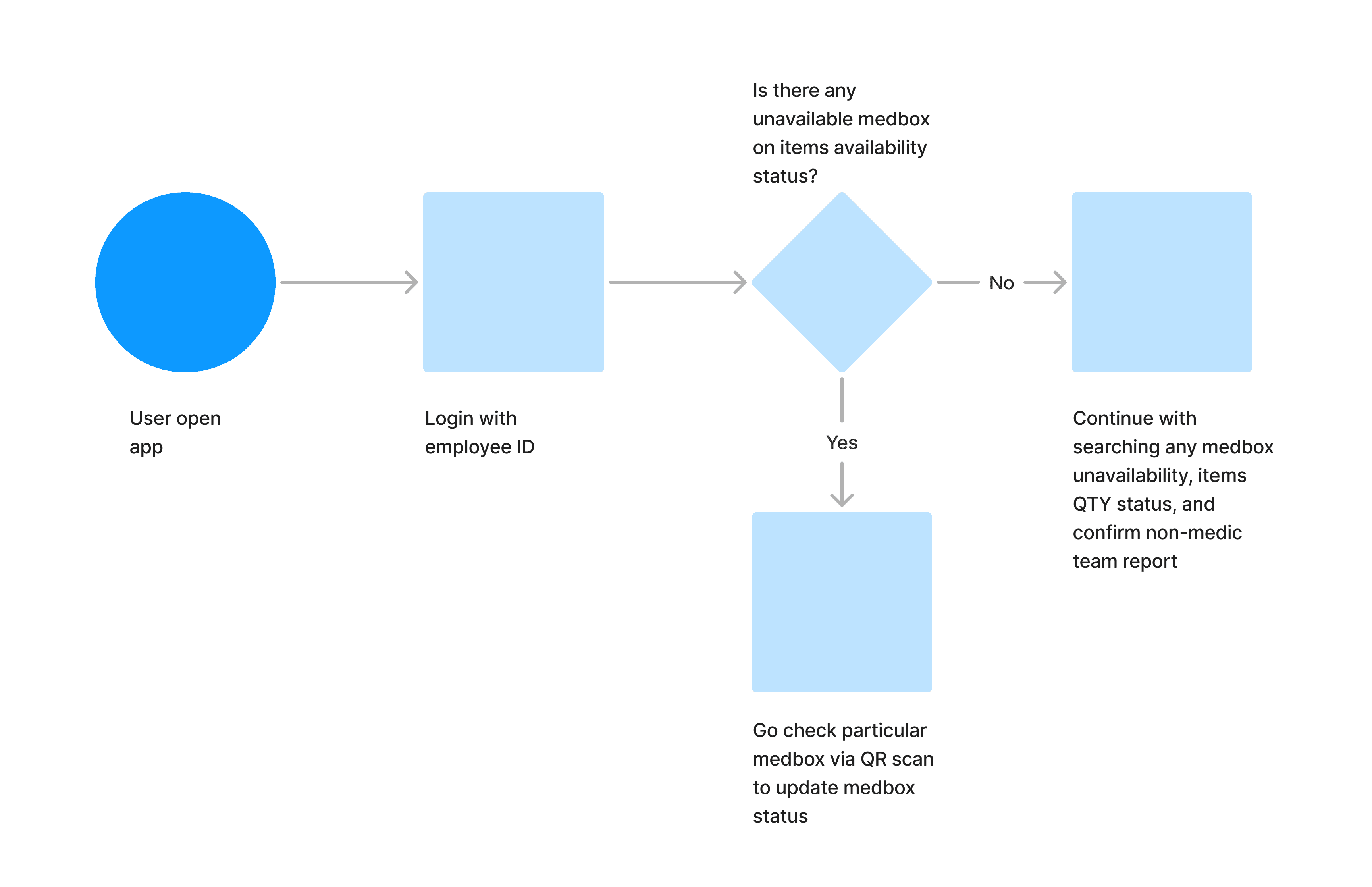
The field worker flow
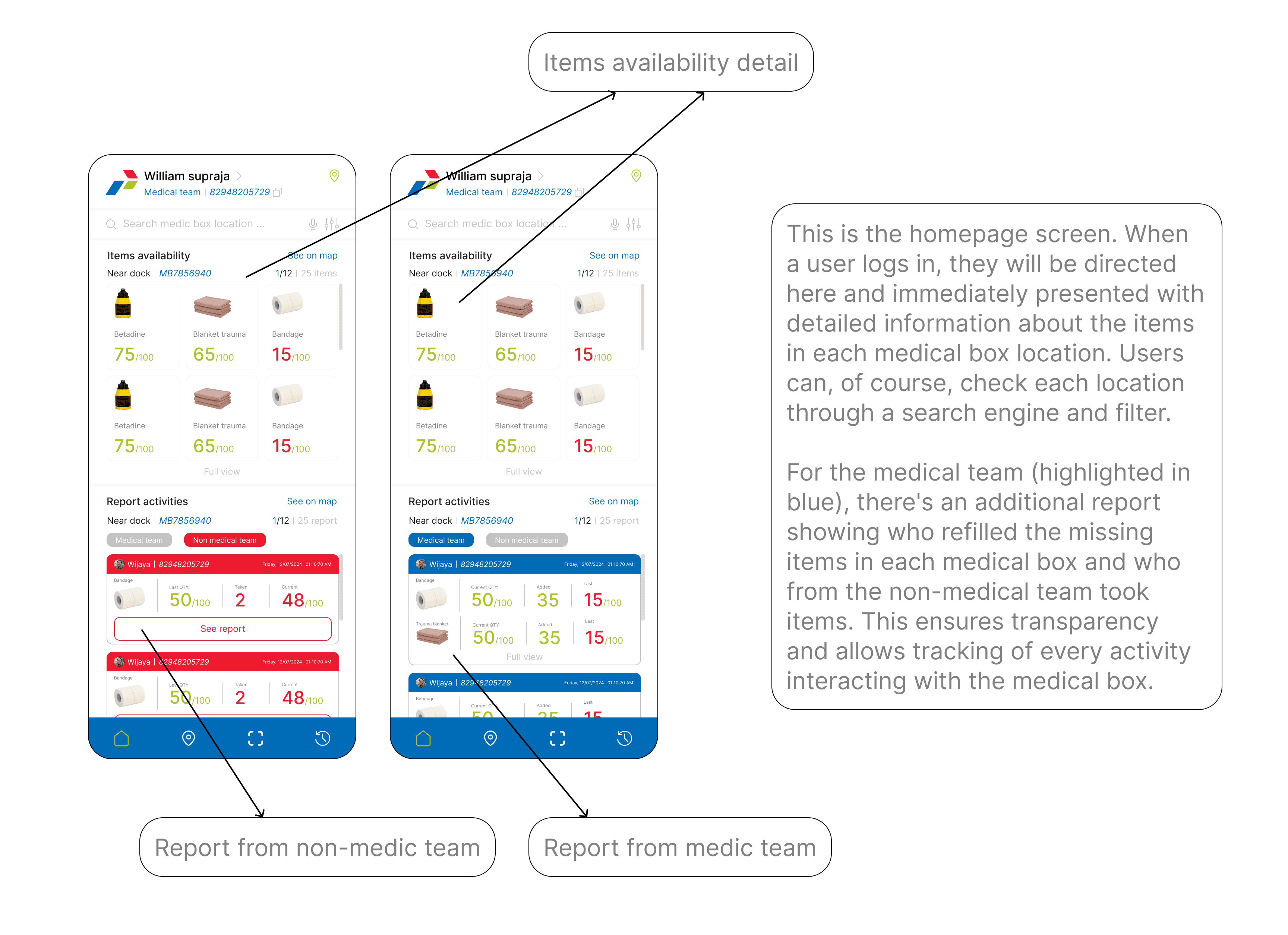
Home screen
What key objective has been achieved?:
Enhance accessibility
Improve emergency response
Integrate IoT technology
Streamline user experience
Ensure accountability
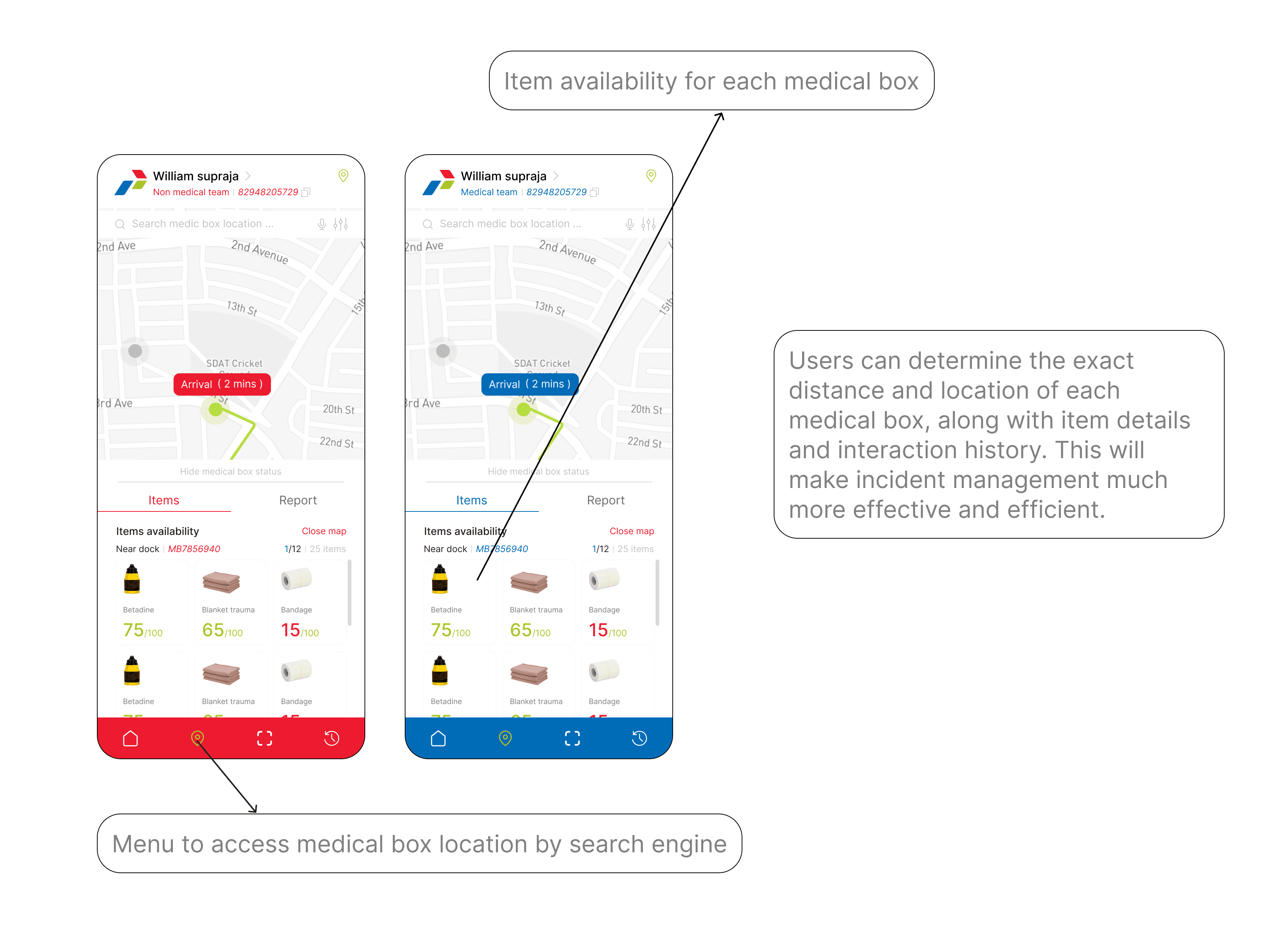
Medical box map location
What key objective has been achieved?:
Enhance accessibility
Integrate IoT technology
Streamline user experience
Ensure accountability
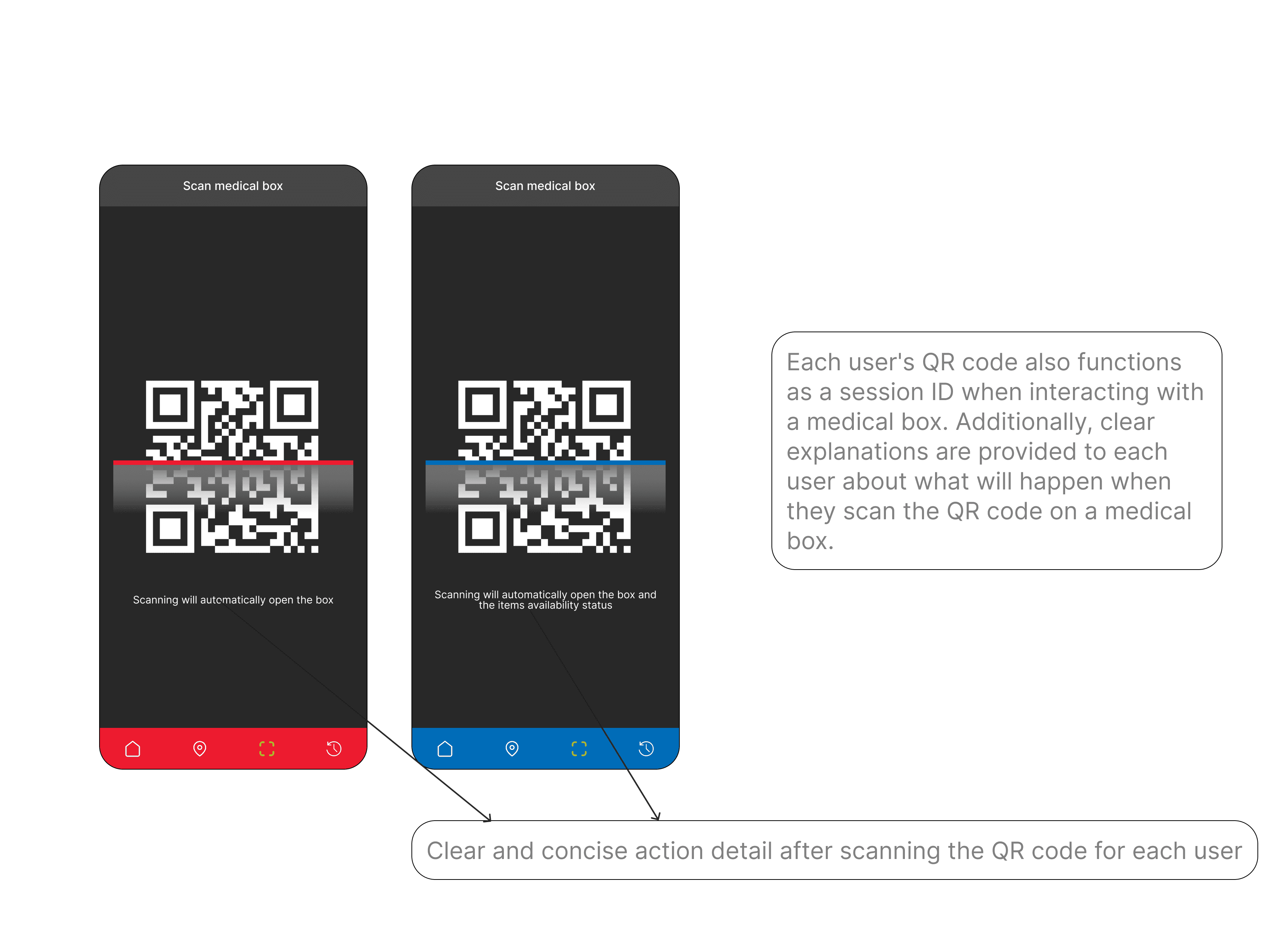
QR code to open medical box
What key objective has been achieved?:
Enhance accessibility
Integrate IoT technology
Streamline user experience
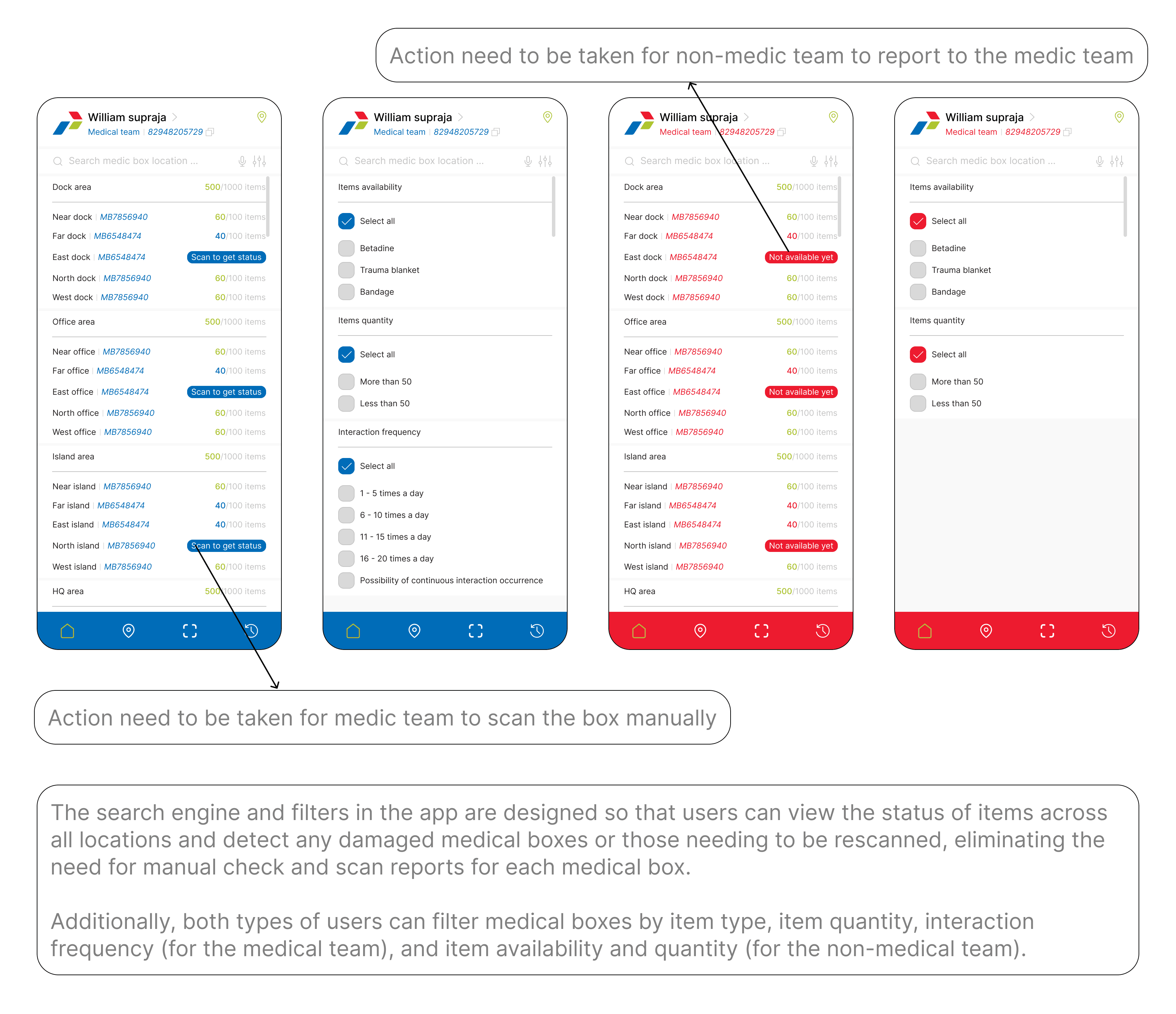
Advance medical box filter
What key objective has been achieved?:
Enhance accessibility
Improve emergency response
Integrate IoT technology
Streamline user experience
Report submit for field worker
What key objective has been achieved?:
Improve emergency response
Integrate IoT technology
Streamline user experience
Ensure accountability
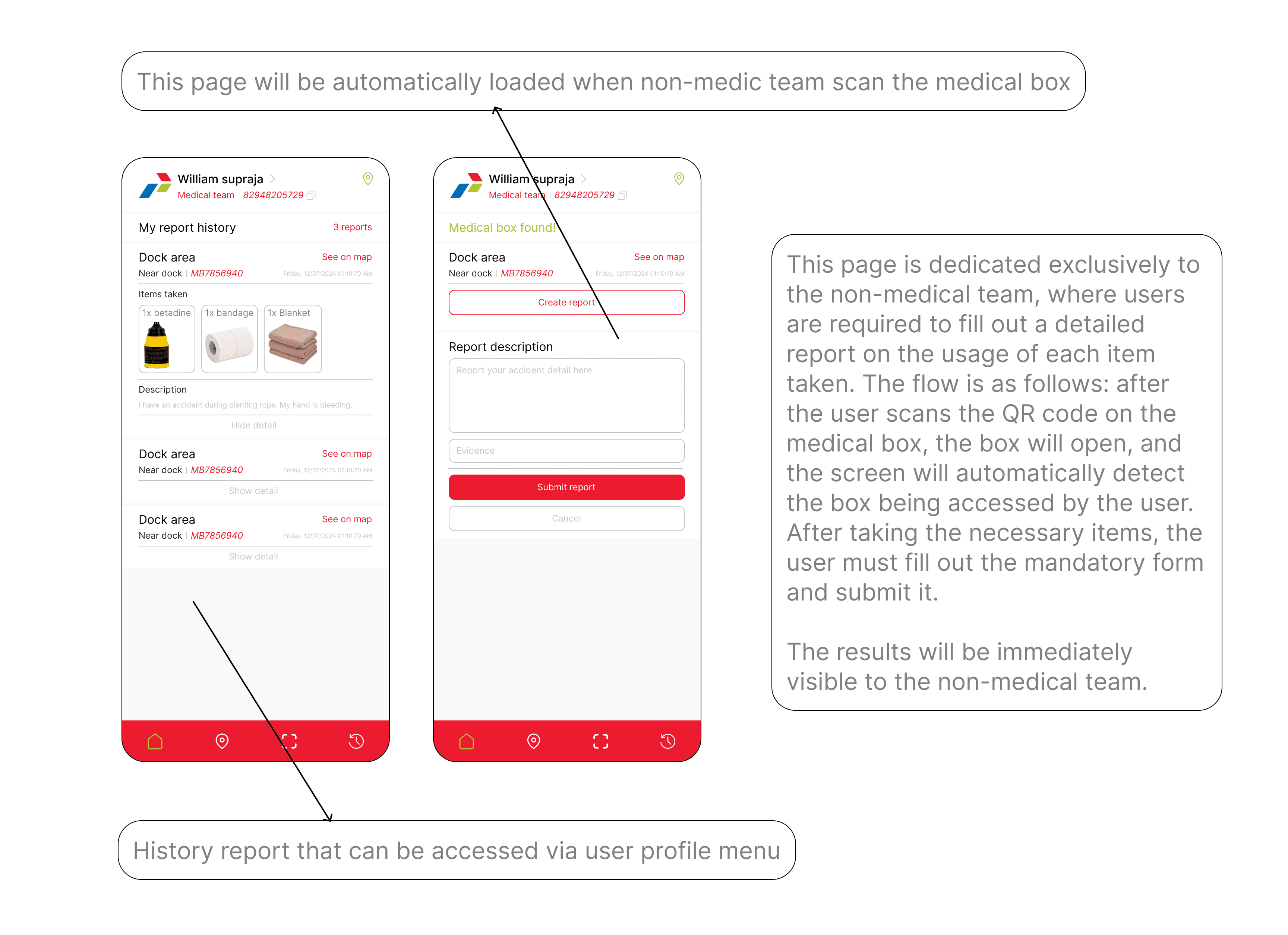
I designed a prototype for the medical box tracking app to evaluate how user-friendly and satisfying it is. To get meaningful insights, I conducted moderated usability sessions with 5 field workers, 3 medical officers, and 2 safety managers. Each participant tackled tasks like finding the nearest medical box, getting directions to its location, scanning a QR code to open it, and checking its condition and contents.
The tests were run on both Android and iOS smartphones, giving me a clear view of how users interacted with the app. It was exciting to see their reactions—both the positive feedback and the areas for improvement, which I later worked into the design. Engaging with users during this process was incredibly motivating and helped me focus on creating a design that truly works for them.
Usability testing result:
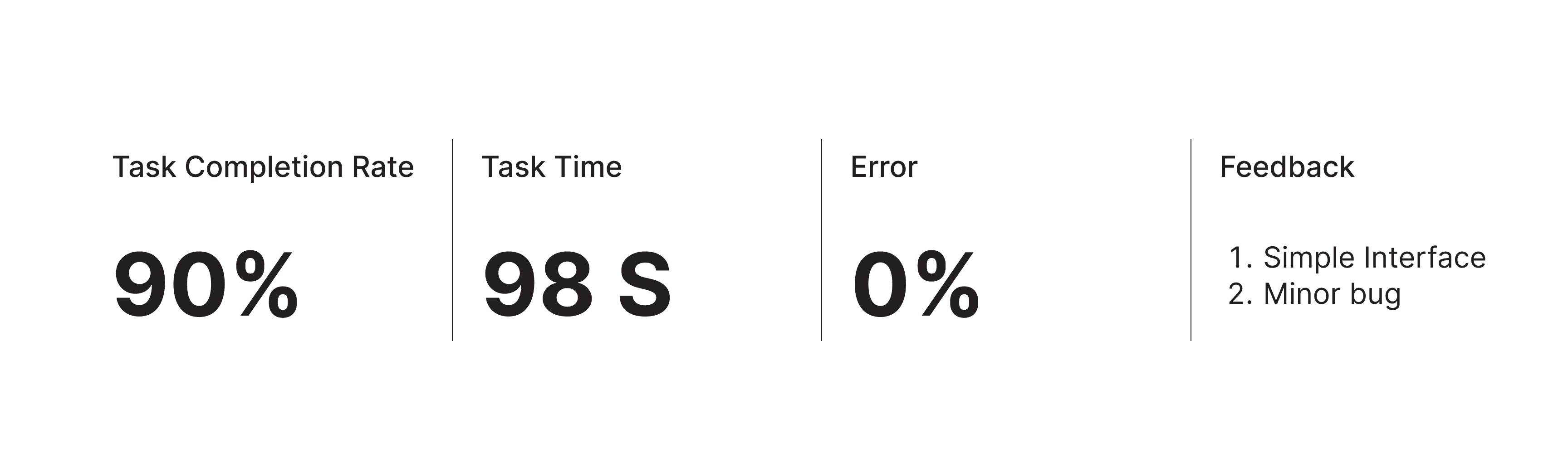
System usability score:
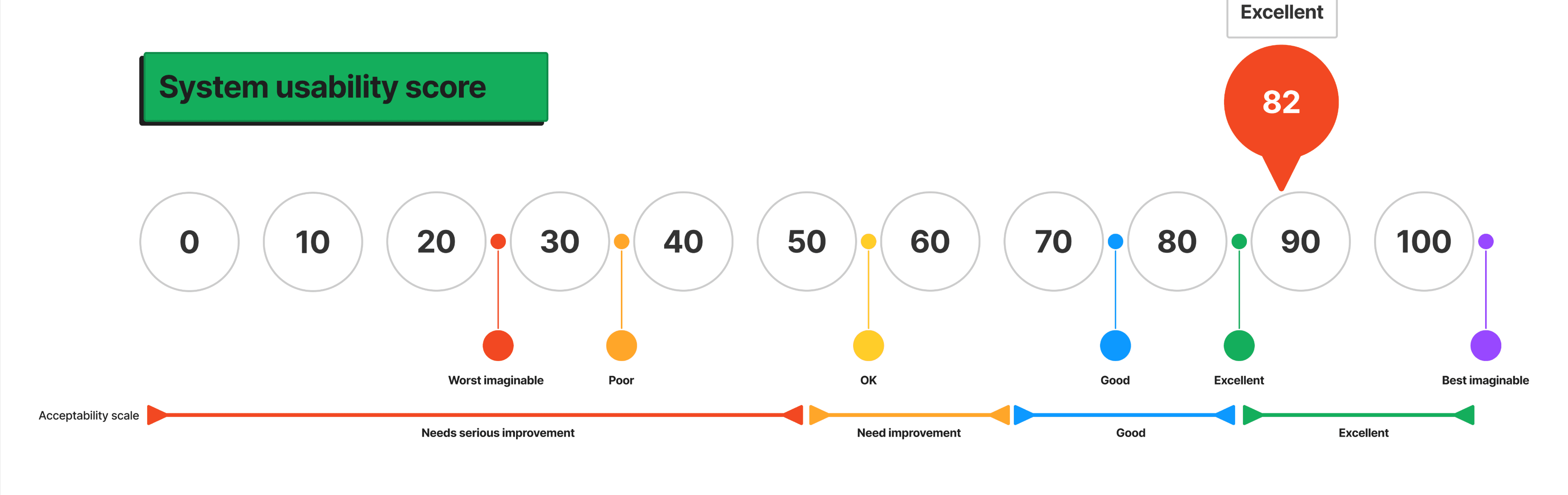
This project emphasized the importance of user-centered design in safety applications. Collaborating with the product designer, we seamlessly integrated IoT technology into medical boxes, ensuring physical and digital elements met Pertamina's workforce needs. Clear communication between design and development was crucial for aligning with project objectives. Usability testing also provided key insights, enabling adjustments to enhance the user experience.
Moving forward, we plan to enhance the app by simplifying navigation, improving accessibility, and integrating advanced security features like biometric authentication. We’ll also develop a reporting system to track medical supply usage and inventory while adding predictive maintenance alerts to keep medical boxes in optimal condition for emergencies.